

Watch the launch event
Ministers of finance and central bank governors of developing countries convened on 15 April in Washington, DC on the margins of the IMF-World Bank Spring Meetings to launch the platform.
The opening segment was streamed live on UNTV and featured statements by António Guterres, Secretary-General of the United Nations; Mia Amor Mottley, Prime Minister of Barbados; Ahmed Kouchouck, Minister of Finance of Egypt; and Muhammad Aurangzeb, Federal Minister for Finance and Revenue of Pakistan.
Who can join?
The platform is open to borrower countries of all sizes, across different stages of development and levels of indebtedness.
A first round of invitations has been sent to borrowing developing countries. Those not yet invited but wishing to confirm their eligibility should contact UNCTAD as the platform's secretariat.
Contact
Borrowers' platform secretariat
borrowers.platform@unctad.org
What's the Borrowers' Platform?
A break from the past – bringing borrowers into the conversation
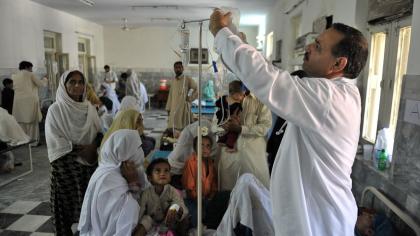
Debt servicing costs in developing countries have soared over the past decade, squeezing their public finances and forcing them into tough trade-offs. As more revenue goes to debt repayments, less is available for public services and climate action.
- Developing countries’ external debt burden reached $11.7 trillion in 2024.
- In 2024, they spent almost 10% of government revenue on interest payments to creditors abroad.
- Least developed countries pay nearly a quarter of their revenue to external creditors.
- 54 countries, home to 3.4 billion people, now spend more on debt than on health or education.
3.4 billion people deserve better outcomes. They're not asking for charity. They want a level playing field where finance enables development rather than constraining it.
For decades, developing countries have faced debt challenges arising not only from country-specific circumstances but also from structural weaknesses in the global financial architecture.
Creditor-driven coordination and negotiation mechanisms have been insufficiently responsive to borrowers’ collective needs.


Objectives
The platform fills a gap in the international financial architecture by providing a borrower-led space to share knowledge and amplify their collective voice.
The platform enables countries to
- Share experiences and practical solutions
- Learn from each other
- Strengthen their capacity to manage and respond to debt challenges
- Engage more effectively in global financial and debt discussions
- Send a positive market signal by improving debt sustainability and transparency
The platform is not
- A crisis coordination mechanism
- A forum for collective debt restructuring negotiations
- A standard-setting or collective bargaining entity
UNCTAD on debt


A new space for cooperation on debt
Momentum has been building among United Nations Member States towards reform of the international debt and financial architecture. A key, long-recognized gap is the lack of a dedicated platform for cooperation among borrowers to elevate their collective voice, safeguard their interests and share knowledge.
In June 2025, the UN Secretary-General’s Expert Group on Debt proposed establishing a borrowers’ platform as one of eleven recommendations. The idea took shape in the Sevilla Commitment, adopted by Member States at the 4th International Conference on Financing for Development in July 2025.
Paragraph 48 (i) calls for establishing a platform for borrower countries to discuss technical issues, share information and experiences, increase access to technical assistance and capacity-building, coordinate approaches and strengthen their voices in the global debt architecture.
In October 2025, Member States adopted the Geneva Consensus at the 16th UN Conference on Trade and Development (UNCTAD16). Paragraph 80.65 calls on UNCTAD to facilitate the exchange of experiences and technical discussions among borrower countries, enhance their voice and foster cooperation to improve debt management practices.
Working group
An initial working group, comprising Egypt and Pakistan (chair and vice-chair), along with Colombia, Honduras, Maldives, Nepal and Zambia, developed draft modalities outlining the platform’s objectives, governance and participation.
UN Trade and Development (UNCTAD) was appointed as the platform’s secretariat, providing technical and administrative support.
From commitment to action
A new space for cooperation on debt
2024
Expert Group
United Nations Secretary-General António Guterres appoints the Expert Group on Debt to promote actionable policy solutions. UNCTAD serves as the group's secretariat.
2025
Report
The UN Secretary-General's Expert Group on Debt publishes its final report "Confronting the Debt Crisis: 11 Actions to Unlock Sustainable Financing". The Borrowers' Platform is among the proposals and receives broad support.
2025
FfD4 — Sevilla
At the 4th International Conference on Financing for Development, UN Member States adopt the Sevilla Commitment, calling for a borrower-led platform to strengthen coordination, peer learning and collective voice on debt.
2025
IMF–World Bank
A high-level ministerial roundtable on the margins of the International Monetary Fund and World Bank Annual Meeting establishes a working group of Member States to guide the development of the Borrowers' Platform initiative until its launch, with UNCTAD as the secretariat.
2025
Working Group
A seven-country working group, with Egypt as chair and Pakistan as vice-chair, begins drafting the platform's purpose and structure. The Working Group includes Colombia, Honduras, Maldives, Nepal and Zambia.
2026
Official launch
Ministers of Finance and Central Bank Governors of borrowing developing countries convene in Washington D.C. to launch the Borrowers' Platform. To mark this historic occasion, UN Secretary-General António Guterres attends the Launch.